

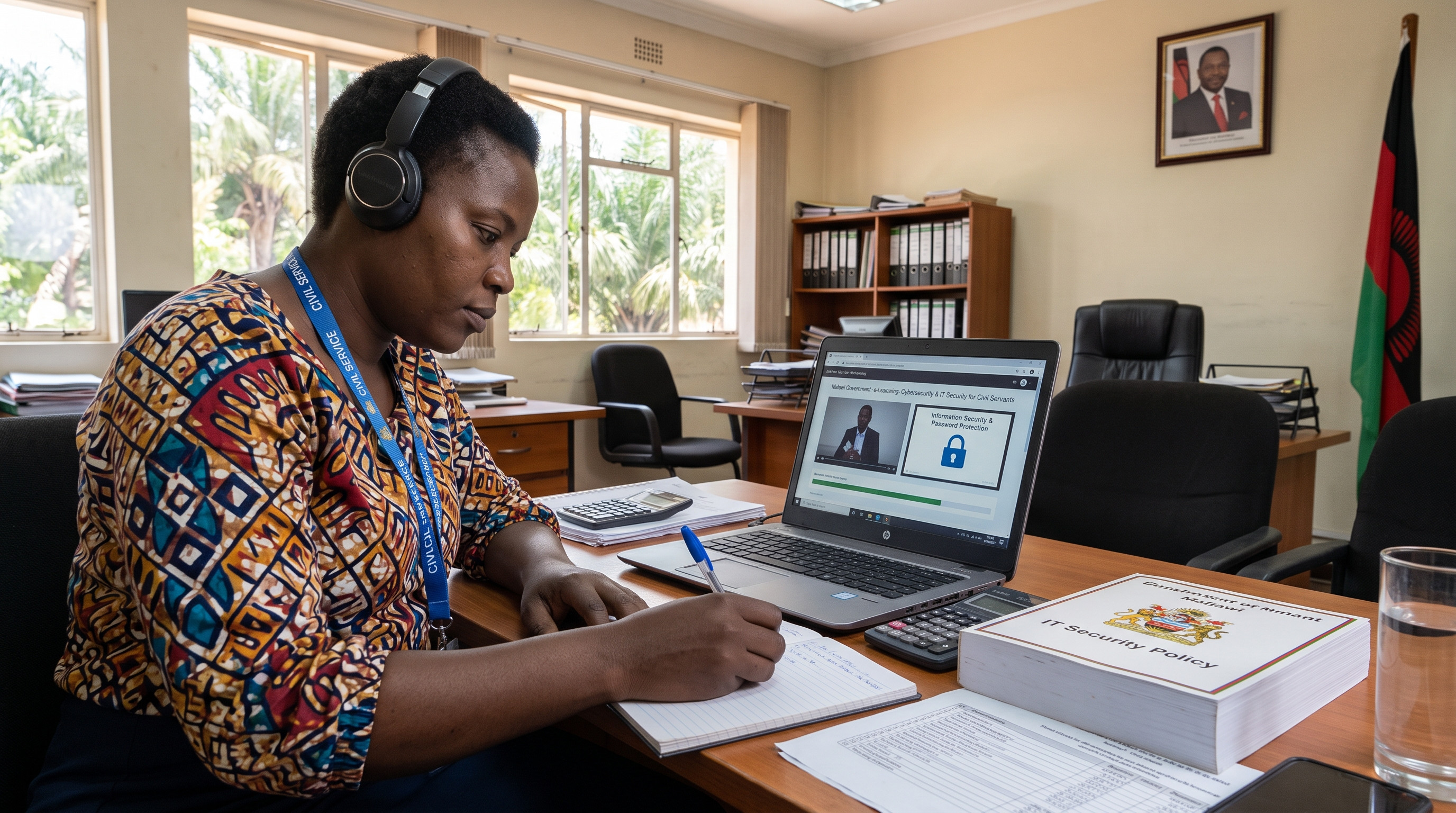
Every email you open, password you use, and document you share involves a decision about information security. Your everyday choices help protect government services, colleagues, and the people whose information is entrusted to you.
Why this course matters to your work
Whether you manage citizen records, prepare reports, process payments, or communicate with other institutions, you handle information that needs protection. This course will help you recognise common risks and make safer decisions when using digital tools and handling government data.
What you will learn
- Security Foundations — why information needs protection and how confidentiality, integrity, and availability apply to your work.
- Password and Access Security — how to protect your accounts and use access responsibly.
- Email Phishing Awareness — how to recognise suspicious messages and respond appropriately.
- Safe Use of Digital Tools — how to reduce risks when using everyday workplace technology.
- Handling Government Data Safely — how to protect information when storing, using, and sharing it.
What is expected of you
- Work through each module in the order shown.
- Read the explanations and instructions carefully, and complete the activities and questions provided.
- Relate the examples to your daily responsibilities and your institution’s procedures.
- Use fictional examples in your responses. Keep passwords, personal details, and confidential work information private.
- Share your feedback at the end of the course to help improve the learning experience.
Before you begin
No technical background is required. Think of one situation where you handle work information, such as emailing a report or accessing a shared computer. As you progress, consider what you could do to make that situation safer.
Begin with Security Foundations to explore what you are protecting and why it matters.
- Teacher: Abadallah Tanayneh
